
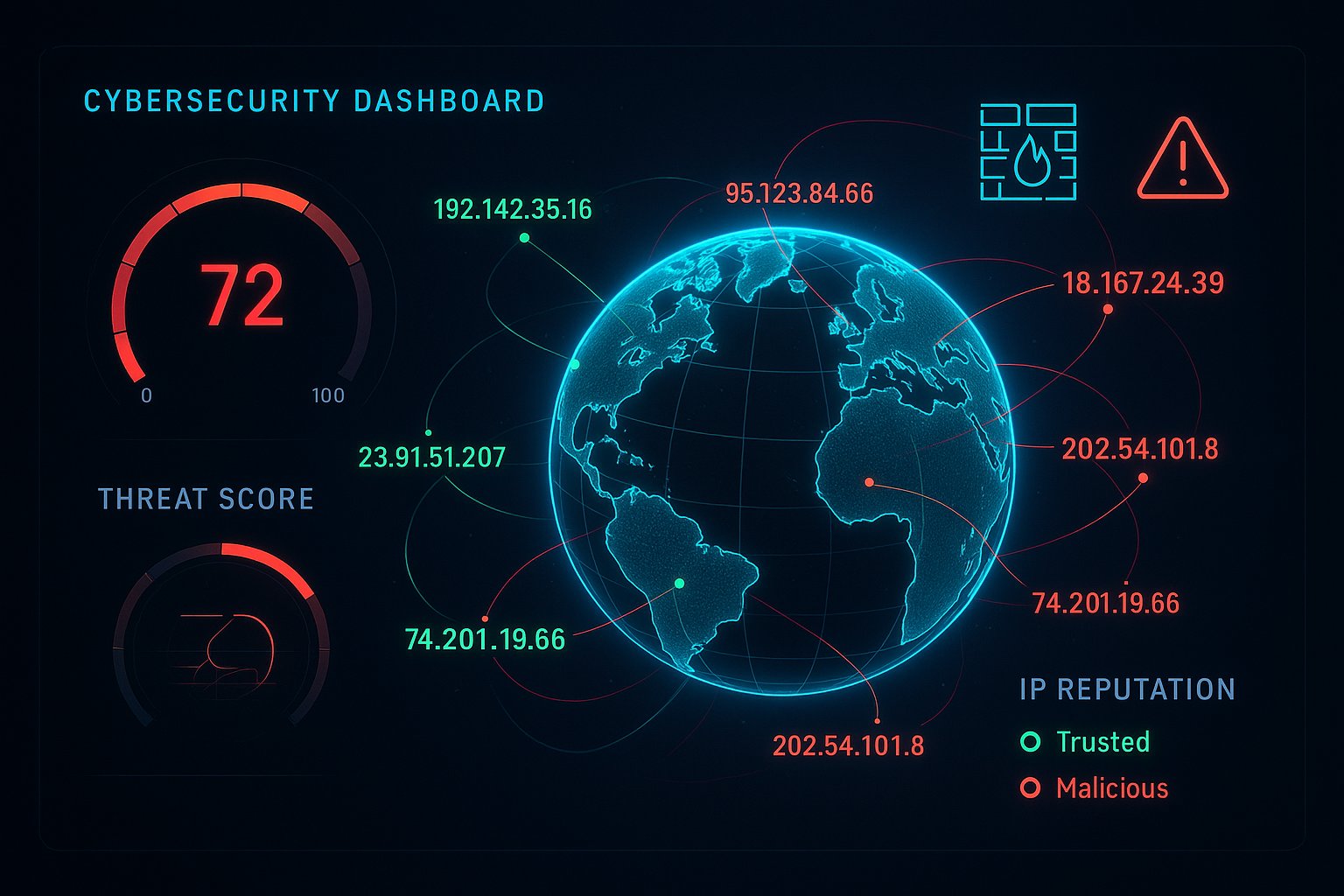

Staying Ahead of Threats with IP Reputation and Risk Scoring
Today’s cyber threats aren’t just growing—they’re evolving fast. As a result, hackers are getting smarter, attacks more stealthy, and security teams increasingly need better tools to stay ahead. That’s exactly why IP Reputation and Risk Scoring has become so critical.
Whether you manage network infrastructure or lead security strategy, knowing which IPs to trust—and which to block—can save your system from a breach. In this guide, we’ll first break down how IP reputation works, then explain what risk scoring means, and finally show why combining them is one of the smartest moves you can make for your security stack.
What Is IP Reputation?
Think of every IP address as a digital passport. Some are clean. Others carry the stains of past attacks—spam, malware, phishing, or brute-force login attempts.
IP reputation tells whether you can trust that passport.
Security platforms build this reputation using real-world data. It could be reports from spam filters, signals from malware detection tools, or logs from honeypots. If an IP has a bad track record, its reputation drops. Clean IPs build trust over time.
In short, reputation is based on behavior. If an IP’s been involved in shady activity, it’ll get flagged.
What Is Risk Scoring?
Now let’s talk about risk scoring. It’s like giving each IP a grade based on how risky it is. Instead of just labeling an IP “bad” or “good,” risk scoring adds nuance.
An IP could be:
- High risk (actively spreading malware)
- Medium risk (connected to suspicious behavior)
- Low risk (clean history, normal traffic patterns)
These scores come from analyzing a variety of factors. For instance, analysts track how often the IP gets flagged, pinpoint its location, examine the type of traffic it sends, and note when it’s most active during the day.
By combining IP reputation and risk scoring, security systems don’t just react—they get proactive.
Why IP Reputation and Risk Scoring Matter
Cybersecurity teams don’t have the time (or resources) to review every IP manually. With millions of requests flying in daily, automation is key.
Here’s what reputation and scoring help you do:
- Block shady traffic before it reaches your network
- Prioritize high-risk alerts in your SIEM
- Zero in on real threats faster
- Fine-tune firewalls and WAFs for better protection
- Cut down false positives by adding context
It’s like having an extra set of eyes watching the door—24/7, without the burnout.
How IP Reputation and Risk Scoring Work
Let’s walk through how the process plays out behind the scenes:
- Collect the data
It starts with massive data gathering. IP behavior is tracked through honeypots, DNS records, firewalls, and global threat feeds. - Evaluate the IP
Systems scan for red flags—spam, malware, phishing, unusual access patterns. If something’s off, it gets noted. - Assign a score
Based on what the system finds, it assigns a reputation level or risk score. High score? High risk. - Keep it fresh
An IP’s reputation isn’t fixed. Maybe it was clean yesterday, but today it’s part of a botnet. Scoring engines update constantly to stay current. - Take action automatically
With scoring in place, your security tools can block bad IPs in real-time—or flag them for review.
Signs an IP Has a Bad Reputation
Need a quick red flag checklist? Watch for IPs that:
- Are listed on global blacklists
- Distribute malware or ransomware
- Attempt brute-force logins
- Try to reach known C2 (command and control) servers
- Are tied to phishing or spoofed sites
If you’ve ever had to clean up after a compromised IP, you know it’s better to spot these early.
How It Fits Into Your Security Stack
If you’re already using firewalls, SIEMs, or intrusion detection tools, that’s a great start. However, adding IP reputation and risk scoring takes them to the next level by making them smarter and more proactive.
Here’s where it fits:
- Firewalls: Block or rate-limit based on score
- SIEMs: Prioritize alerts using risk levels
- WAFs: Drop traffic from high-risk IPs before it hits your app
- Fraud detection: Filter out suspicious traffic in real time
At Fraudo.io, we help teams do just that—fusing IP insights into existing stacks without breaking workflows.
Benefits of Using IP Reputation and Risk Scoring
Still wondering if it’s worth it? Here’s what you gain:
- Faster threat detection
- Less manual investigation
- Improved SOC response time
- Fewer false alarms
- Earlier detection of targeted attacks
It’s like upgrading from motion sensors to facial recognition—more precise, less noise.
Best Practices for Using Reputation Data
Want to use IP reputation and risk scoring like a pro? Keep these tips in mind:
- Don’t rely on one feed: Multiple sources = better accuracy.
- Pair with behavior analysis: Reputation alone isn’t foolproof.
- Update often: Threat actors rotate IPs. Your data should keep up.
- Set custom rules: What’s risky for one company might be fine for another.
- Review edge cases: Automate, but always spot-check.
Real talk: automation is awesome, but judgment matters too.
A Quick Real-World Scenario
Let’s say your login endpoint is getting hammered. Same IP. Dozens of failed attempts. Instead of just locking the account, your system checks IP reputation and risk scoring—and spots a high-risk score, tied to past botnet activity.
Without delay, it blocks the IP, logs the event, and notifies your team. The threat’s neutralized, and your users never even knew it happened.
That’s the power of smart defense.
Conclusion
In a world where bad actors don’t take breaks, IP reputation and risk scoring give your security stack a fighting chance. They offer context, automation, and a sharper view of what’s happening in your traffic—so you can stop attacks before they start.
If you’re ready to build smarter defenses, Fraudo.io is here to help. We make it easier to track threats, score IPs, and take real-time action—without slowing down your ops.
Also Read:
How to Detect Proxies & VPNs with IP Lookup Tools
How Proxy Detection APIs Help Stop Online Fraud (And Why Your Business Needs One)
FAQs: IP Reputation and Risk Scoring
1. How often is IP reputation updated?
Reputation changes fast. Most systems update in near real-time based on fresh data from threat feeds.
2. Can a clean IP go bad?
Definitely. Clean IPs can be hijacked or start acting suspicious—so scoring needs to stay current.
3. Is IP reputation the same as a blacklist?
Not quite. Blacklists are binary. Reputation scoring gives you more context—helping you make smarter decisions.
4. How do I check an IP’s reputation?
You can check logs or connect your systems to reputation feeds—but automation’s the way to go for scale.
5. Does poor IP reputation affect email deliverability?
Yep. A bad sender reputation can send your emails straight to spam or get them blocked entirely.